
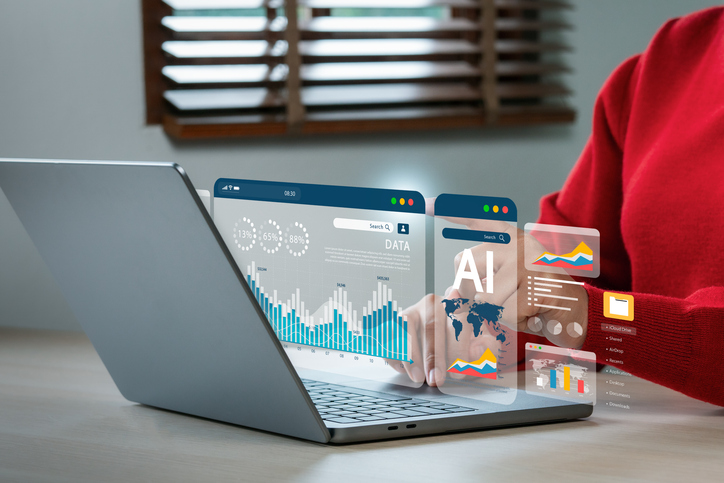
IT automation is rapidly redefining how modern organizations manage support, security, and scalability. As artificial intelligence becomes embedded into IT operations, help desks are shifting from reactive ticket resolution to proactive system design. Organizations that adopt an automation-first IT strategy are reducing costs, improving security posture, and scaling faster than ever before.
For decades, IT has been defined by a familiar rhythm. Tickets come in, technicians respond, problems get solved, and the cycle repeats. The work has always been valuable, but it has also been relentlessly reactive. Even the best IT departments spend too much time putting out fires instead of building systems that prevent fires in the first place.
But something has changed.
Today, IT automation is no longer optional. It is becoming the defining feature of modern IT operations. Organizations that embrace automation-first thinking operate faster, safer, and with far less friction than those relying on traditional help desk models.
In the future, IT will not be judged by how quickly it responds to problems. It will be judged by how effectively it eliminates them.
That is why the future of IT is automation, and AI is the accelerant bringing that future forward faster than anyone expected.
Why IT Automation Is Becoming Essential
Every IT leader feels the pressure. More devices, more cloud systems, more security threats, more compliance requirements, and rising user expectations. Yet budgets do not increase at the same pace. Staffing does not scale quickly enough. Burnout becomes constant.
IT process automation changes that equation.
Instead of assigning technicians to repetitive requests such as password resets, access provisioning, software installs, onboarding workflows, and MFA troubleshooting, organizations can build systems that handle these tasks automatically and consistently.
Automation does not replace IT. It removes unnecessary repetition and gives teams the one resource they have always needed more of: time.
How AI Is Transforming IT Support
The most significant leap in IT automation is being driven by artificial intelligence.
AI in IT support has evolved from novelty to operational tool. Today, AI can answer common IT questions, diagnose technical problems based on symptoms, suggest troubleshooting steps in real time, and summarize tickets to reduce unnecessary back-and-forth communication. When integrated into a ticketing system, AI becomes a virtual triage assistant that shortens time to resolution and improves consistency.
This is not just about chatbots. Modern AI tools can interpret logs, recognize recurring patterns, and recommend next steps based on historical data. That changes how IT teams operate at a foundational level.
AI as a Communication Upgrade
One of the most overlooked advantages of AI automation in IT is communication.
Many IT professionals are strong problem solvers, but translating technical fixes into clear, user-friendly language is not always natural. AI can assist by rewriting updates in a professional and empathetic tone, which reduces miscommunication and builds trust with executives and non-technical stakeholders.
Instead of writing, “User profile corrupted. Rebuilt. Works now,” an AI-supported response might explain the issue clearly, confirm resolution, and proactively invite follow-up. That difference strengthens credibility and improves the overall user experience.
AI is not only making IT faster. It is making IT more effective.
The Rise of No-Code IT Automation
Historically, automation required scripting expertise in tools such as PowerShell, Bash, and API integrations. That technical barrier limited who could build and manage automation.
That barrier is shrinking.
No-code and low-code automation platforms now allow IT teams to design workflows using visual interfaces rather than complex scripts. This shift changes who can contribute to automation initiatives and expands the capacity of IT departments.
The value of IT professionals is shifting away from memorizing commands and toward designing secure, repeatable systems. Teams can now automate account provisioning, license assignments, onboarding workflows, offboarding access revocation, and collaboration site creation without building everything from scratch.
This does not make IT less technical. It makes IT more strategic by focusing expertise on governance, architecture, and operational outcomes rather than repetitive execution.
Agent-Based AI Automation Platforms
Automation once meant simple conditional logic. If one event occurred, a predefined action followed.
AI automation platforms are expanding that model into agent-based systems that interpret intent. Instead of rigid workflows, modern AI agents can read a ticket written in plain language, determine what is being requested, verify policy requirements, execute appropriate steps, and communicate completion back to the user. Escalation happens only when something falls outside defined parameters.
This fundamentally shifts the role of IT. Rather than acting as a middle layer between employees and technology, IT becomes the architect of systems that respond intelligently and autonomously.
Self-service becomes conversational and intuitive rather than dependent on static portals and dropdown menus.
Security in the Age of AI Automation
Automation increases speed, and speed amplifies impact. That includes mistakes.
If AI automation is implemented without governance, organizations may introduce new risks such as unauthorized access escalation, data leakage into AI models, over-permissioned automation accounts, shadow workflows, and compliance exposure related to standards like HIPAA or FERPA.
Automation must be treated as infrastructure and governed with strong cybersecurity controls. It requires identity controls, least-privilege design, audit logging, monitoring, and clear usage policies. AI does not reduce the need for cybersecurity discipline. It increases it.
The future of cybersecurity will include AI, but it will demand stronger oversight and accountability than ever before.
The Future of IT Roles
IT is moving away from reactive support and toward proactive system design.
Professionals will spend more time building automation workflows, maintaining AI knowledge bases, improving end-user experience, and creating standardized onboarding and deployment systems. In many organizations, IT departments will begin to resemble internal product teams responsible for operational platforms rather than ticket queues.
The most valuable IT professionals will not be those who resolve issues the fastest. They will be those who design systems that prevent issues from appearing in the first place.
The Competitive Advantage of Automation-First IT
Organizations that prioritize IT automation consistently reduce support costs, improve security consistency, and increase employee productivity. They scale operations without proportionally increasing headcount and adapt more quickly to change.
In an environment defined by constant technological evolution, adaptability becomes a competitive advantage. Automation-first IT enables that adaptability.
Final Thoughts
The traditional IT model was built around response.
The emerging model is built around automation, intelligence, and proactive system design.
AI is accelerating this transformation faster than any previous technology shift. No-code platforms are lowering barriers to automation. Agent-based systems are redefining self-service. At the same time, governance and security are becoming more critical, not less.
The future of IT is not a larger help desk.
It is a smarter system.
And the teams that embrace automation today will be the ones leading tomorrow.
If your organization is evaluating how to implement secure IT automation, our team can help.